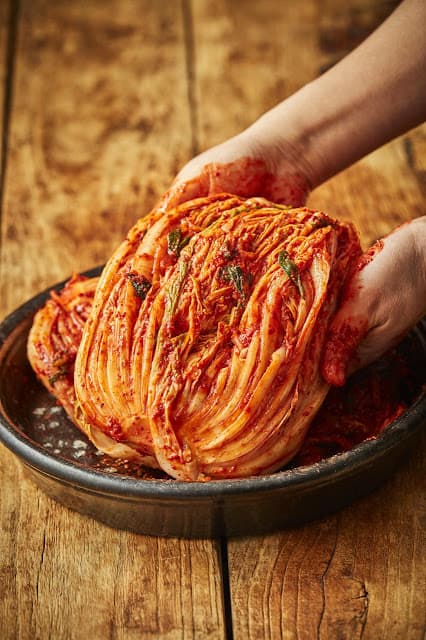
Baechu Kimchi [Photo Credit] KTO, Alex Bundo
TL;DR – Learn Kimchi Vocabulary, Types, Ingredients & Cultural Expressions
This post teaches core Korean around kimchi—from basic words (배추, 무, 양념, 발효, 김장, 김치냉장고) to 12 popular styles (배추김치, 깍두기, 동치미, 백김치 등), key ingredients (고춧가루, 마늘, 생강, 젓갈) and the full making flow (prep → seasoning → salting → filling → storing). You’ll also meet everyday proverbs like “김칫국부터 마신다.” Study the phrases, then try a small batch and use the language in real life.
Kimchi is a representative dish that symbolizes Korean culture and is loved by people worldwide. Learn about the types, ingredients, flavors, and preparation methods of kimchi while simultaneously improving your Korean language skills! Next, try making kimchi yourself and put the words you’ve learned into practice in real life!
1. Basic Vocabulary Related to Kimchi
l 김치: Fermented Korean side dish made with vegetables and seasonings.
저는 매일 밥과 김치를 먹어요.
I eat rice and kimchi every day.
l 배추: Napa cabbage is the main ingredient in most kimchi.
배추를 절여야 김치를 만들 수 있어요.
You need to salt napa cabbage to make kimchi.
l 무: Korean radish is a key ingredient in many types of kimchi, such as kkakdugi.
무는 김치의 아삭한 식감과 시원한 맛을 더해줍니다.
Radish adds a crunchy texture and refreshing flavor to kimchi.
l 양념: Seasoning or spices.
김치의 맛은 양념에 따라 달라져요.
The taste of kimchi varies depending on the seasoning.
l 발효: Fermentation.
김치는 발효 과정에서 깊은 맛이 생겨요.
Kimchi develops a deep flavor during fermentation.
l 김장: The traditional Korean practice of making and storing a large amount of kimchi for winter.
올해 김장은 가족 모두 함께했어요.
This year, the whole family participated in making kimjang.
l 김치냉장고: Kimchi Refrigerator
김치냉장고는 김치의 발효와 보관에 이상적인 온도를 유지해 줍니다.
A Kimchi Refrigerator helps maintain the ideal temperature for fermenting and storing kimchi.
2. Types of Kimchi
There are over 200 varieties of kimchi in Korea. Here, we introduce 12 of the most popular types enjoyed by Koreans.
l 배추김치 (Baechu Kimchi): Korea’s representative kimchi is made by salting napa cabbage and fermenting it with seasonings such as red chili powder, garlic, and ginger.

배추김치는 한국 식탁에서 빠질 수 없는 반찬입니다.
Baechu kimchi is an essential side dish on Korean tables.
l 깍두기 (Kkakdugi): Diced radish kimchi with a crunchy texture.

깍두기는 설렁탕과 잘 어울리는 김치입니다.
Kkakdugi is a kimchi that pairs perfectly with seolleongtang (Korean ox bone soup).
l 열무김치 (Yeolmu Kimchi): A summer kimchi made with young radishes.
열무김치는 비빔밥에 곁들여 먹기 좋아요.
Yeolmu kimchi is excellent for pairing with bibimbap.
l 파김치 (Green Onion Kimchi): Kimchi is made with long green onions, which offer a fragrant flavor.

파김치는 구운 고기와 함께 먹으면 더 맛있어요.
Green onion kimchi tastes even better with grilled meat.
l 오이소박이 (Oi Sobagi): Cucumber stuffed with seasoning after being salted.
오이소박이는 여름철 인기 있는 김치입니다.
Oi sobagi is a popular kimchi during summer.
l 동치미 (Dongchimi): Water-based kimchi made with radishes, known for its refreshing and clean taste.

동치미는 겨울철에 국수와 함께 먹기 좋아요.
Dongchimi is perfect to eat with noodles during winter.
l 갓김치 (Gat Kimchi): Kimchi made with mustard greens, offering a spicy and tangy flavor.
갓김치는 갓 특유의 알싸하고 톡 쏘는 맛과 향, 아삭아삭한 식감이 살아 있어 인기가 많아요.
Gat Kimchi is highly popular for its unique spicy and tangy flavor, the distinctive aroma of mustard greens, and its delightfully crunchy texture.
l 보쌈김치 (Bossam Kimchi): Napa cabbage leaves stuffed with meat and various ingredients.

보쌈김치는 보쌈과 함께 손님을 대접할 때 잘 어울리는 음식입니다.
Bossam Kimchi pairs perfectly with bossam (Korean boiled pork) and is an excellent choice for serving guests.
l 백김치 (Baek Kimchi): White kimchi made without red chili powder, offering a mild and clean flavor.

백김치는 맵지 않아서 아이들도 잘 먹어요.
White kimchi isn’t spicy, so even kids enjoy it.
l 나박김치 (Nabak Kimchi): A watery kimchi made with thinly sliced radish and cabbage in a light, refreshing brine.

나박김치는 국물이 많아 시원하고 개운한 맛이 특징입니다.
Nabak kimchi has a lot of broth, offering a cool and refreshing taste.
l 총각김치 (Chonggak Kimchi): Young radish kimchi with a crunchy texture and a slightly spicy, tangy flavor.

총각김치는 아삭아삭한 식감으로 남녀노소 모두에게 인기입니다.
Chonggak kimchi is loved by all for its crisp texture.
l 섞박지 (Seokbakji): A mixed kimchi made with cubed radish, napa cabbage, and other vegetables in a spicy seasoning.
섞박지는 칼칼하고 시원한 맛으로 입맛을 돋우며, 아삭아삭한 식감이 살아 있어 씹는 즐거움을 더합니다.
Seokbakji’s spicy and refreshing flavor stimulates the appetite, and its crunchy texture adds to the joy of eating.
3. Vocabulary Related to Kimchi Ingredients
Kimchi varies widely depending on the region, climate, and ingredients, with each type having its unique combination of ingredients and seasonings. You can create various types of kimchi tailored to your taste based on the following ingredients.
l 고춧가루: Red chili powder.

고춧가루를 많이 넣으면 김치가 매워요.
Adding a lot of red chili powder will make the kimchi spicy.
l 마늘: Garlic.
마늘은 김치 맛을 더 깊고 풍부하게 만들어줘요.
Garlic enhances the flavor of kimchi, making it more profound and more prosperous.
l 생강: Ginger.
생강을 약간 넣으면 더 향긋한 김치가 돼요.
Adding a bit of ginger makes the kimchi more aromatic.
l 젓갈: Fermented fish sauce.

멸치젓갈과 새우젓갈이 김치에 많이 사용돼요.
Anchovy and shrimp sauces are commonly used in kimchi.
l 소금: Salt.
소금은 배추를 절이는 데 필수예요.
Salt is essential for salting napa cabbage.
l 설탕 (Seoltang): Sugar.
설탕은 김치의 감칠맛을 더해주는 역할을 해요.
Sugar enhances the umami flavor of kimchi.
Seafoods such as oysters, squid, shrimp, and fruits like apples, pears, and jujubes are sometimes added to kimchi.
4. Vocabulary Used in the Kimchi-Making Process
Step 1: Preparing the ingredients
l 김치에 필요한 재료인 배추, 무, 파, 고추, 마늘, 생강 등을 준비합니다.
Prepare the necessary ingredients for kimchi, such as napa cabbage, radish, green onions, chili peppers, garlic, and ginger.
l 재료를 깨끗이 씻고 손질합니다.
Wash and prepare the ingredients thoroughly.
l 배추는 겉잎을 제거하고 반으로 자릅니다.
Remove the outer leaves of the cabbage and cut it in half.
l 무는 채를 썰거나 깍뚝 썹니다.
Slice the radish into thin strips or cube it.
l 파는 어슷썰고, 고추, 마늘, 생강은 잘게 다집니다.
Cut the green onions diagonally, and finely chop the chili peppers, garlic, and ginger.
Step 2: Making the seasoning
l 고춧가루에 약간의 물을 부어 촉촉하게 불려줍니다.
Add a small amount of water to the red chili powder to moisten it.
l 다진 마늘, 생강, 젓갈, 설탕 등을 넣고 골고루 섞습니다.
Mix in minced garlic, ginger, fermented seafood, and sugar evenly.
l 양념이 고루 섞이도록 충분히 저어줍니다.
Stir thoroughly to ensure the seasoning is well combined.
Step 3: Salting the napa cabbage
l 배추를 소금물에 담근 후 줄기 부분에 소금을 뿌립니다.

Soak the napa cabbage in salt water, then sprinkle salt on the stems.
l 배추가 고르게 절여지도록 가끔 뒤집어 줍니다.
Turn the cabbage occasionally to ensure even salting.
l 절여진 배추는 깨끗한 물에 여러 번 헹군 뒤 물기를 제거합니다.
Rinse the salted cabbage thoroughly in clean water and drain the excess water.
Step 4: Filling and mixing
l 절인 배추의 잎 사이에 양념을 넣고 골고루 발라줍니다.
Spread the seasoning between the leaves of the salted cabbage evenly.
l 겉잎으로 배추를 감싸 정리합니다.

Wrap the cabbage with its outer leaves to secure it.
Step 5: Storing
l 완성된 김치는 김치통에 하나씩 차곡차곡 담습니다.
Place the prepared kimchi neatly into the kimchi container, layer by layer.
l 김치 위에 우거지를 덮어 공기가 닿지 않게 합니다.
Cover the top of the kimchi with outer cabbage leaves to prevent air exposure.
l 김치를 실온에서 발효시킨 뒤, 발효가 완료되면 냉장고에 보관합니다.
Let the kimchi ferment at room temperature, and once fermentation is complete, store it in the refrigerator.
5. Proverbs and Expressions Related to Kimchi
l 떡 줄 사람은 생각도 않는데 김칫국부터 마신다.
Literal Translation: “Drinking kimchi soup before someone even thinks of giving you rice cake.”
Meaning: A proverb that metaphorically expresses rejoicing or disappointment over something that hasn’t been decided yet.
l 김치국부터 마신다.
Literal Translation: “Drinking kimchi soup first.”
Meaning: Similar to the above proverb, it describes acting as if something has been decided or achieved when it is still uncertain.
l 파김치가 되다.
Literal Translation: “Becoming like green onion kimchi.”
Meaning: A metaphor for being completely exhausted and drained of energy.
l 김칫국에 밥 말아먹는 소리 한다.
Literal Translation: “Talking as if pouring rice into kimchi soup to eat.”
Meaning: Refers to saying something meaningless or having empty hopes and dreams.
l 김치 없이 밥 먹는 소리 한다.
Literal Translation: “Talking as if eating rice without kimchi.”
Meaning: Since kimchi is an essential part of a Korean meal, this expression describes attempting something impossible or unimaginable.
l 김치 없이 밥 못 먹는다.
Literal Translation: “Can’t eat rice without kimchi.”
Meaning: Indicates strong dependency on something or someone, similar to needing an essential part of life.
l 김치 국물도 안 준다.
Literal Translation: “Not even giving kimchi broth.”
Meaning: Refers to someone being extremely stingy or unwilling to share even the smallest thing.
l 김치도 때가 있다.
Literal Translation: “Even kimchi has its time.”
Meaning: Everything has its proper time and place; timing is essential.
l 김치독을 깨다.
Literal Translation: “Breaking the kimchi jar.”
Meaning: Causing a big problem or ruining a carefully prepared situation.
l 김치도 모른다.
Literal Translation: “Doesn’t even know kimchi.”
Meaning: Describes someone as naive, ignorant, or lacking basic knowledge.
📍 Want More Like This?
Keep building your Korean through food! Dive into these hand-picked posts that pair language with culture and dining.
- 🔖 Korean Language & Culture: 88 Must-Know Expressions About Food and Taste
- 🔖 Master Korean Food Names and Menus: Simplify Your Korean Dining Experience
- 🔖 Korean Cuisine Guide: Iconic Regional Foods You Must Try
- 🔖 Learn Useful Expressions for Your Trip to Korea
Appendix. Kimchi-related vocabulary and example sentence audio files
1) Learn Kimchi Vocabulary_ Types, Ingredients, and Cultural Expressions 1
2) Learn Kimchi Vocabulary_ Types, Ingredients, and Cultural Expressions 2
3) Learn Kimchi Vocabulary_ Types, Ingredients, and Cultural Expressions 3
4) Learn Kimchi Vocabulary_ Types, Ingredients, and Cultural Expressions 4
5) Learn Kimchi Vocabulary_ Types, Ingredients, and Cultural Expressions 5