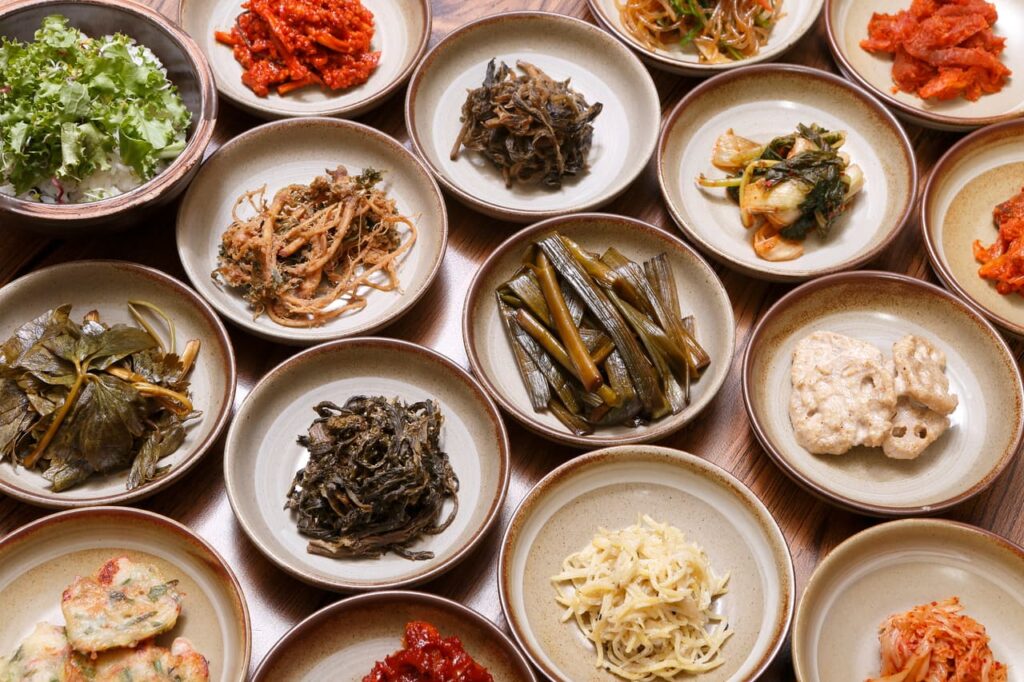
Sanchae Set Menu [Photo Credit] Korea Tourism Organization, Frame Studio
TL;DR – Authentic Korean flavor starts with the pantry.
Building a Korean pantry means stocking jang (ganjang, gochujang, doenjang), aekjeot (kanari/anchovy/tuna fish sauces), oils (sesame & perilla), sweeteners (oligosaccharide, corn syrup, jocheong, honey), gochugaru (coarse & fine), MSG & dasida, aromatics (garlic, ginger, scallions), broth makers (dasima, dried anchovy/shiitake, broth packs), and starches (sweet-potato starch, glutinous rice flour, cornstarch). Key distinctions covered: guk-ganjang vs jin/yangjo ganjang, mirin/matsul, oligosaccharide vs corn syrup, coarse vs fine gochugaru, and sesame vs perilla oil. Use these, plus proper storage and smart substitutes, to match the taste you remember from Korea—no fancy gear required.
Authentic ingredients are the key to capturing the true flavors of Korean food. These ingredients are typically available at Korean or Asian grocery stores, but their availability may vary depending on your location.
If you’ve ever noticed a difference in taste between Korean dishes you tried in Korea and those prepared abroad, more than 90% of that difference likely comes down to the ingredients themselves. The remaining difference may be attributed to variations in water quality, temperature control, cooking tools, and the unique touch you add during the cooking process.
In this post, I will introduce various condiments, spices, and seasonings commonly used in Korean cuisine, along with their Korean names, excluding main ingredients such as meat, seafood, and vegetables. By incorporating the following ingredients into your cooking, you can more closely recreate the authentic taste of Korean food.
발효된 장 (Fermented Sauces)
1. 간장 (Ganjang, Soy Sauce)
l Description: Made from fermented soybeans, soy sauce adds a salty and umami-rich flavor to dishes.
l Uses: Frequently used in soups, stews, braises, and stir-fried dishes.
l Popular Korean Brands: Sempio, Chung Jung One, Monggo Soy Sauce
There are several types of soy sauce in Korea. Here’s a brief overview of the main types commonly used.
Soy sauce, brewed soy sauce, and jin soy sauce are interchangeable terms. Guk soy sauce and Joseon soy sauce are similar and can be used interchangeably. Therefore, it’s practical to classify soy sauces into three groups: Soy Sauce/Brewed Soy Sauce/Jin Soy Sauce, Guk Soy Sauce/Joseon Soy Sauce, and Seasoned Soy Sauce. For example, if a recipe calls for two tablespoons of Guk soy sauce, you can substitute it with two tablespoons of Joseon soy sauce.
[the types of soy sauce]

2. 고추장 (Gochujang, Red Chili Paste)
l Description: A fermented paste made from red chili powder, glutinous rice, and soybean powder, providing a spicy kick.
l Uses: Adds heat to bibimbap, tteokbokki, stews, and more.
l Popular Korean Brands: Haechandle, Chung Jung One
3. 된장 (Doenjang, Soybean Paste)
l Description: A fermented soybean paste with a savory, earthy flavor.
l Uses: Used in soybean paste stew (된장찌개), ssamjang, and vegetable side dishes.
l Popular Korean Brands: Chung Jung One, Haechandle
4. 쌈장 (Ssamjang, Seasoned Soybean Paste)
l Description: A blend of soybean and chili paste, commonly used as a dipping sauce.
l Uses: Often paired with grilled meats and fresh vegetables.
l Popular Korean Brands: Chung Jung One, Haechandle
l DIY Substitute: Mix soybean and chili paste and so on
5. 초고추장 (Chogochujang, Vinegared Red Chili Paste)
l Description: A tangy and slightly sweet red chili paste mixing gochujang with vinegar and sugar.
l Uses: Commonly used as a dipping sauce for raw fish, fresh vegetables, and bibimbap.
l Popular Korean Brands: Chung Jung One, Haechandle
l DIY Substitute: Mix gochujang, vinegar, sugar, and so on
액체 양념 & 기름 (Liquid Seasonings & Oil)
6. 까나리 액젓 (Kkanari Aekjeot, Kanari Fish Sauce)
Kanari fish sauce (made from sandlance) is the most representative in Korea. Derived products, such as tuna fish sauce and anchovy fish sauce, were developed from kanari fish sauce.
l Description: Kanari fish sauce is made from fermented sand lance, known for its unique, rich umami flavor and lighter aroma than other fish sauces. It’s commonly used in Korean cuisine to enhance the depth and flavor of dishes.
l Uses: Primarily used for making kimchi, soups, stews, and various side dishes, it adds a subtle, salty depth without overpowering the dish.
l Popular Korean Brands: Chung Jung One, Ha Seon Jeong
l Substitute: Tuna fish sauce, Anchovy fish sauce
7. 참치 액젓 (Chamchi Aekjeot, Tuna Fish Sauce)
l Description: A fermented sauce made from tuna with a rich umami flavor.
l Uses: Commonly used in kimchi-making and stews.
l Popular Korean Brands: Dongwon, Halla, Sajo
l Substitute: Kanari fish sauce, Anchovy fish sauce
8. 멸치 액젓 (Myeolchi Aekjeot, Anchovy Fish Sauce)
l Description: A sauce made from fermented anchovies, adding saltiness and depth.
l Uses: Used in kimchi, salads, and stews.
l Popular Korean Brands: Ha Seon Jeong, Gijang
l Substitute: Kanari fish sauce, Tuna fish sauce, or a mix of soy sauce and anchovy broth
9. 매실청 (Maesilcheong, Plum Extract)
l Description: A fermented liquid from plums and sugar, giving a sweet-tart flavor.
l Uses: Commonly used in drinks, side dishes, and braised dishes.
l Popular Korean Brands: Sempio, Chung Jung One, Hanrawon
10. 참기름 (Chamgireum, Sesame Oil)
l Description: Pressed from sesame seeds, this oil has a rich, nutty flavor.
l Uses: Adds depth to bibimbap, namul (vegetable side dishes), and stir-fries.
l Popular Korean Brands: Beksul, Ottogi
11. 들기름 (Deulgireum, Perilla Oil)
l Description: Pressed from perilla seeds, with a flavor distinct from sesame oil.
l Uses: Commonly used in vegetable side dishes, salads, and stir-fries.
📌 Perilla oil is best purchased in smaller quantities due to its short shelf life.
12. 식초 (Sikcho, Vinegar)
l Description: A tart condiment made through fermentation, providing a sour note to dishes.
l Uses: Used in salads, cold soups, and so on.
13. 미림/맛술 (Mirim/Matsul, Cooking Rice Wine)
l Description: A cooking wine that enhances umami and reduces dish odors.
l Uses: Often added to fish, stews, and stir-fries to enhance flavor and mask unwanted odors.
l Popular Korean Brands: Beksul, Chung Jung One
l Substitutes: Soju, white wine, sake
📌 Cooking rice wine (미림) and cooking wine (맛술) share similar roles but differ in certain aspects:
– Ingredients: Mirim is a traditional Japanese seasoning made from glutinous rice, rice, koji, and alcohol, while matsul is a Korean cooking wine made from alcohol, sugars, and seasonings.
– Alcohol Content: Mirim typically contains around 14% alcohol, while Matsul generally has about 1-5% depending on the brand.
– Flavor and Uses: Mirim has a deep, aromatic flavor and is often used for fish and meat, while matsul is mildly sweet and umami-rich, suitable for various dishes.
– Storage: Mirim can be stored at room temperature due to its higher alcohol content, whereas Matsul is best kept refrigerated.
14. 고추기름 (Gochugireum, Chili Oil)
l Description: A spicy oil made by infusing chili powder in hot oil.
l Uses: Adds a spicy, savory flavor to bibimbap, stews, and stir-fries.
l Popular Korean Brands: Ottogi, Haepyo
l Substitute: To make at home, heat cooking oil over medium heat (130-150°C), then pour over chili powder in a bowl to create the chili oil. Avoid adding chili powder directly to the hot pan to prevent burning.
15. 물엿/올리고당 (Mullyeot/Olligodang, Corn Syrup/Oligosaccharide)
l Description: A sweet syrup adds sweetness and adjusts the thickness of dishes.
l Uses: Commonly added to bulgogi, tteokbokki, and braised dishes to enhance sweetness and consistency.
l Popular Korean Brands: Beksul, Ottogi, Chung Jung One
l Substitute: Honey or maple syrup
Corn syrup and oligosaccharides serve similar purposes but have distinct differences:
– Ingredients:
. Oligosaccharide: Contains 3-7 bonded sugars, which reach the large intestine undigested, supporting gut health with lower calories and high dietary fiber.
. Corn Syrup: Derived from hydrolyzed corn starch, with glucose as the main component, providing around 200 kcal per 100g.
– Sweetness and Stickiness:
. Oligosaccharide: Offers about 30% of the sweetness of sugar and is less sticky, so it leaves dishes less sticky.
. Corn Syrup: Approximately 1.5 times sweeter than sugar and stickier, it adds a glossy texture and a smoother mouthfeel to dishes.
– Uses:
. Oligosaccharide: Best added at the end of cooking in low-heat dishes like salads or cold dishes.
. Corn Syrup: Resists high heat, making it ideal for braises, stir-fries, and grilled dishes.
– Storage: Both are best stored refrigerated after opening.
📌 There is a similar ingredient called jocheong (rice syrup), which is mainly used in traditional Korean snacks like rice cakes and hangwa (Korean sweets). It’s also used in the production of fermented pastes, such as gochujang (a red chili paste) and doenjang (a soybean paste).
16. 꿀 (Kkul, Honey)
l Description: A natural sweetener harvested from flowers, rich in flavor and nutrients.
l Uses: Adds sweetness and depth to teas, desserts, dressings, sauces, and meats.
17. 식용유 (Sigyongyu, Cooking Oil)
l Description: A general-purpose oil derived from various sources, used for frying, sautéing, and baking.
l Uses: Ideal for deep-frying, stir-frying, and general cooking.
18. 콩기름 (Konggireum, Soybean Oil)
l Description: A neutral-flavored oil extracted from soybeans, widely used in Korean cooking.
l Uses: Great for frying, baking, and as a base for dressings.
l Popular Korean Brands: Beksul, Haepyo
19. 조청 (Jocheong, Rice Syrup)
l Description: A thick, sweet syrup made from fermented rice or barley, often used as a natural sweetener.
l Uses: Commonly used in traditional Korean desserts, sauces, and marinades.
조미료 (Seasoning Powders)
20. 참깨 (Chamkkae, Sesame Seeds)
l Description: Adds a rich, nutty flavor and crunchy texture to dishes.
l Uses: Commonly sprinkled on bibimbap, namul (vegetable dishes), and yukhoe (Korean beef tartare).
📌 Sesame Seeds and Grinder for Cooking
In recipes that specify sesame seeds (참깨) and whole sesame seeds (통깨), you can use regular sesame seeds as they generally serve the same purpose. For sesame salt (깨소금), grind the sesame seeds to create a similar texture and flavor. Here are some recommended sesame grinders that you can purchase on Amazon for convenience.
You can search on Amazon using the sesame grinding tool. I prefer a small, mortar-style tool that can be used manually.
21. 미원 (Miwon, MSG)
l Description: An umami enhancer known as monosodium glutamate (MSG), commonly used to bring depth of flavor.
l Uses: Adds a rich umami taste to soups, stir-fries, and various dishes.
l Popular Korean Brands: Daesang (Miwon)
📌 Canadian influencer Logan Moffitt frequently uses Korean MSG, which enhances the savoriness of most Korean dishes. It is often referred to as “magic powder” in Korea.
📌 Miwon is the brand name of the first seasoning product created in Korea, but it has become so widely recognized that it’s now commonly used as a generic term for seasonings. It’s similar to how “Xerox” is used to mean “copy machine” and “Kleenex” to mean “tissue.”
22. 소고기 다시다 (Sogogi Dasida, Beef Seasoning Powder)
l Description: A beef-flavored seasoning intensifies the taste of soups and broths.
l Uses: Commonly used in soups, stews, and stir-fries.
l Popular Korean Brands: CJ CheilJedang (Dasida)
Beef seasoning powder adds depth to broths, while seafood seasoning (haemul dasida) gives a clean, fresh flavor, ideal for seafood-based dishes.
– Dishes suited to beef seasoning powder: Beef radish soup, soybean paste stew, yukgaejang, fried rice.
– Dishes suited to seafood seasoning powder: Seafood stew, kalguksu, seafood stir-fries, jjamppong.
23. 해물 다시다 (Haemul Dasida, Seafood Seasoning Powder)
l Description: Adds a seafood essence to dishes, enhancing umami.
l Uses: Perfect for seafood stews, soups, and stir-fries.
l Popular Korean Brands: CJ CheilJedang (Dasida)
24. 고춧가루 (Gochutgaru, Red Chili Powder)
l Description: Made from dried red chilies, adding spiciness and color to dishes.
l Uses: Essential for kimchi, stews, and mixed salads.
In recipes, coarse chili powder (굵은 고춧가루) and fine chili powder (고운 고춧가루) are used for different purposes:
– Fine Chili Powder:
. Characteristics: Very finely ground for a smoother texture.
. Advantages: Ideal for soups and sauces, creating a transparent and vibrant color.
. Disadvantages: Less suitable for stir-fries as it lacks a strong spicy kick.
– Coarse Chili Powder:
. Characteristics: Coarser with a more robust texture.
. Advantages: Adds spiciness and crunch to stir-fries, kimchi, and pickles.
. Disadvantages: May cloud broths when used in soups.
25. 천일염 (Cheonillyeom, Sea Salt)
l Description: Sea salt harvested from evaporated seawater preserves natural minerals and deepens flavor.
l Uses: Used in kimchi, stews, and braises.
l Popular Korean Brands: Sinan Sea Salt, NongHyup
l Substitutes: Himalayan salt, kosher salt
📌 When a recipe specifies sea salt (천일염), coarse salt (굵은 소금), or refined salt (가는 소금), understanding their differences can improve the result:
– Sea Salt (천일염):
. Characteristics: Natural, unrefined salt with various minerals and a mild flavor.
. Uses: Ideal for pickling, kimchi, and seasoning at the end of cooking.
– Refined Salt (가는 소금):
. Characteristics: Highly processed, often with consistent, fine granules.
. Uses: Versatile for soups, stews, and quick seasoning.
– Coarse Salt (굵은 소금):
. Characteristics: Larger granules of sea salt add texture.
. Uses: Great for grilling meats and pickling.
26. 맛소금 (Mat Sogeum, Seasoned Salt)
l Description: A blend of acceptable salt and MSG, offering a savory and well-rounded flavor.
l Uses: Commonly used for seasoning soups, stir-fries, and grilled dishes.
l Popular Korean Brands: Beksul, Daesang.
향신채 (Aromatic Vegetables)
27. 다진 마늘 (Dajin Maneul, Minced Garlic)
l Description: Finely chopped garlic that intensifies the flavor in dishes.
l Uses: Essential in stews, stir-fries, and vegetable side dishes.
l Substitute: Fresh garlic, minced at home
28. 깐 마늘 (Kkan Maneul, Peeled Garlic Cloves)
l Description: Fresh garlic cloves peeled for convenient use.
l Uses: Ideal for meat dishes, stews, and side dishes.
l Popular Korean Brands: Fresh produce, generally available without specific brands at supermarkets.
l Substitute: Regular garlic cloves
29. 생강 (Saenggang, Ginger)
l Description: A pungent root vegetable enhances flavor and reduces fishy smells.
l Uses: Commonly used in fish dishes, stews, and salads.
l Popular Korean Brands: Fresh produce, generally available without specific brands at supermarkets.
l Substitute: Ground ginger (adjust the quantity accordingly)
30. 파 (Pa, Green Onion)
l Description: A popular aromatic ingredient in Korean cooking, adding a slightly pungent flavor.
l Uses: Widely used in stews, pancakes, stir-fries, and soups.
l Popular Korean Brands: Fresh produce, generally available without specific brands at supermarkets.
31. 쪽파 (Jjokpa, Scallion)
l Description: Thinner and shorter than green onions, scallions have a mild flavor and subtle sweetness, and are frequently used in Korean cuisine.
l Uses: Essential for kimchi, seasoned vegetables, pancakes, and stir-fries, especially in kimchi-making.
l Popular Korean Brands: Fresh produce, generally available without specific brands at supermarkets.
l Substitute: Green onion or chives
32. 양파 (Yangpa, Onion)
l Description: A versatile vegetable with a slightly sweet and sharp flavor, used as a base ingredient in many Korean dishes.
l Uses: Essential for soups, stews, stir-fries, and marinades.
l Popular Korean Brands: Fresh produce, generally available without specific brands at supermarkets.
33. 부추 (Buchu, Garlic Chives)
l Description: Long, flat leaves with a mild garlic-like flavor, widely used in Korean cooking.
l Uses: Common in pancakes, dumpling fillings, stir-fries, and kimchi.
l Popular Korean Brands: Fresh produce, generally available without specific brands at supermarkets.
34. 생강가루 (Saenggang Garu, Ginger Powder)
l Description: A powdered form of dried ginger, offering a warm, spicy, and slightly sweet flavor.
l Uses: Used in soups, marinades, baked goods, or as a substitute for fresh ginger.
육수 재료 (Broth Ingredients)
35. 다시마 (Dasima, Kelp)
l Description: A seaweed that provides a deep umami flavor, often used as a base for broth.
l Uses: Added to broths for soups, stews, and stir-fries for enhanced umami.
l Popular Korean Brands: Wando dasima, Geoje dasima
36. 말린 표고버섯 (Mallin Pyogobeoseot, Dried Shiitake Mushroom)
l Description: Dried shiitake mushrooms add depth to dishes and are frequently used in broths.
l Uses: Adds richness to soups, stir-fries, and stews.
l Popular Korean Brands: There are various local brands.
l Substitute: Fresh shiitake mushrooms (may alter the flavor slightly)
37. 멸치 (Myeolchi, Dried Anchovy)
l Description: Dried anchovies come in various sizes and are used to add umami to broths for soups and stews.
l Uses: Commonly used in broths for soups, stews, and hot pots.
l Popular Korean Brands: Gijang myeolchi
38. 디포리 (Dipeori, Dried Large Anchovy)
l Description: Dried large anchovies provide a bold and savory flavor, making them ideal for broth preparation.
l Uses: Commonly used in soups, stews, and traditional Korean broths.
l Popular Korean Brands: Various local brands specialize in high-quality dried anchovies.
39. 코인 육수 (Koin Yuksu, Coin Broth)
l Description: Pre-portioned broth cubes are made conveniently, offering rich flavor without requiring long preparation.
l Uses: Ideal for quick soups, stews, and enhancing the taste of dishes.
l Popular Korean Brands: There are various local brands.
40. 육수팩 (Yuksu Pak, Broth Pack)
l Description: Broth packs contain pre-mixed dried ingredients, such as kelp, anchovies, and mushrooms, to make traditional Korean stock.
l Uses: Simplifies broth preparation for soups, stews, and hotpots.
l Popular Korean Brands: There are various local brands.
전분류 (Starchy Ingredients)
41. 옥수수 전분 (Oksusu Jeonbun, Cornstarch)
l Description: A fine powder made from corn that thickens and adds texture to dishes.
l Uses: Often used in sauces, marinades, and fried food batter to provide a crispy texture.
l Popular Korean Brands: There are various local brands.
l Substitute: Potato starch, rice flour (though may alter texture slightly)
42. 찹쌀가루 (Chapssalgaru, Glutinous Rice Flour)
l Description: Made from glutinous rice, this flour provides a chewy texture when cooked.
l Uses: Essential for making Korean rice cakes and dumplings.
l Popular Korean Brands: There are various local brands.
l Substitute: Regular rice flour (though the texture will be less sticky)
43. 고구마 전분 (Goguma Jeonbun, Sweet Potato Starch)
l Description: A starch derived from sweet potatoes, giving a chewy texture when used in noodles.
l Uses: Commonly used to make Korean glass noodles for dishes like japchae.
l Popular Korean Brands: There are various local brands.
기타 (Additional ingredient)
44. 당면 (Dangmyeon, Korean Glass Noodles)
l Description: Chewy noodles made from sweet potato starch, commonly used in Korean dishes.
l Uses: Essential for japchae and various hot pot dishes.
l Popular Korean Brands: There are various local brands.
45. 쌀 (ssal, Rice)
l Description: The staple grain of Korean cuisine, providing a soft, sticky texture when cooked.
l Uses: Used in almost every Korean meal, including bibimbap, kimbap, and as a side dish.
l Popular Korean Brands: There are various local brands.
📌 Korean rice differs from rice in other countries in its short, round grains and sticky texture when cooked. This stickiness makes it ideal for Korean dishes like bibimbap, kimbap, and various side dishes, as it holds together well and has a soft, chewy texture.
46. 현미 (Hyeonmi, Brown Rice)
l Description: A whole grain rice variety, rich in fiber and nutrients, with a slightly nutty flavor.
l Uses: Used as a healthier alternative to white rice in various dishes.
l Popular Korean Brands: There are various local brands.
📌 The main difference between brown and white rice is that it retains its bran and germ layers, making it higher in fiber, vitamins, and minerals. This gives it a nuttier flavor and chewier texture than white rice, which has had these layers removed, resulting in a softer texture and a milder taste.
47. 미역 (Miyeok, Dried Seaweed)
l Description: A staple in Korean cuisine, miyeok is a type of edible seaweed, typically sold dried, which expands significantly when soaked in water. It has a mild, briny flavor and a chewy texture.
l Uses: Essential for making miyeokguk (seaweed soup), salads, and a healthy addition to various broths and stews.
l Popular Korean Brands: There are various local brands.
❓ FAQ (Frequently Asked Questions)
Q1. What’s the practical difference between soup soy sauce (guk-ganjang) and regular soy sauce (jin/yangjo)?
Guk-ganjang is lighter in color but saltier and very savory; it seasons soups and namul without darkening the broth. Jin/yangjo is darker and rounder for everyday cooking, marinades, and stir-fries. If you must substitute, use a smaller amount of regular soy sauce and add salt to taste as needed. (Wikipedia, Reddit)
Q2. Can I use Kikkoman or Japanese shoyu in Korean recipes?
Yes, for many dishes (marinades, stir-fries). For clear soups where color matters, guk-ganjang still works best because it’s lighter and saltier. (Cooking Korean food with Maangchi, Food Network, Kimchimari)
Q3. What’s the deal with “jin,” “yangjo,” and “Joseon/guk” soy sauces?
– Jin: often a blended or all-purpose soy sauce (label meanings vary by brand).
– Yangjo: naturally brewed, mildly sweet.
– Joseon/guk: traditional soup soy sauce, very salty and pale.
Read labels—brand terminology isn’t fully standardized. (Kimchimari)
Q4. Fine vs. Coarse Gochugaru—When Do I Use Which?
Fine powder provides a smooth texture and transparent color in soups/sauces; coarse flakes cling better for kimchi and add a pleasant texture to stir-fries. Many kimchi makers combine both. (Wikipedia, Reddit)
Q5. Gochujang vs. sriracha—are they interchangeable?
Not really. Gochujang is a fermented paste (thick, savory-sweet, umami); sriracha is a vinegar-forward hot sauce. In a pinch, you can mix sriracha with a bit of miso/honey to mimic body, but flavor won’t be identical. (Master Class, Wikipedia, Pepper Geek)
Q6. Perilla oil vs. sesame oil—what’s the flavor difference, and can I swap them?
Both are nutty, but perilla oil is more herbaceous/earthy; sesame oil is toastier. You can swap in some dishes, but the aroma will change—use smaller bottles and finish fast for the best flavor. (My Korean Kitchen)
Q7. Kanari (sandlance) vs. anchovy vs. tuna fish sauce—when to use which?
All bring umami; kanari is lighter aromatically, anchovy is classic for kimchi and banchan, and tuna is richer. Choose based on intensity and aroma preference; they’re often interchangeable. (My Korean Kitchen)
Q8. What is Dasida (다시다)? Is there a seafood version?
Dasida is a popular Korean bouillon-style seasoning (commonly beef), used to enhance soups/stews, and marinades; seafood and clam versions are also available for a cleaner ocean flavor. (CJ제일제당, Oriental Mart)
Q9. Is MSG (Miwon) safe?
Yes—MSG is generally recognized as safe (GRAS) by the FDA; some people report short-term sensitivity, but controlled studies haven’t consistently reproduced reactions. Use moderately, like salt. (U.S. FDA, Mayo Clinic)
Q10. Do I need to refrigerate sesame or perilla oil?
They go rancid faster than neutral oils. Refrigeration isn’t strictly required but helps prolong freshness—especially for toasted sesame/perilla oil. Buy small bottles and keep them away from heat/light.
Q11. Where can I buy these ingredients outside Korea?
Large chains carry most staples: H Mart (US/Canada/UK), T&T Supermarket (Canada; now expanding to the US), Assi Plaza (US), and Korea Foods/Seoul Plaza (UK). Many also sell online.
Q12. Why do dishes taste different outside Korea if I follow the recipe?
Ingredient differences (chili variety, soy sauce type, fish sauce style, and oil freshness) explain most of the gap; water, cookware, and heat control account for the rest. Start by matching pantry items as closely as possible (see Q1–Q8), and your flavors will snap into place.
📍 Want to master Korean flavors faster?
Dive into these related guides from our library to shop smarter, season better, and speak the language of Korean food.
- 🔖 Master Korean Food Names and Menus: Simplify Your Korean Dining Experience
- 🔖 Korean Cuisine Guide: Iconic Regional Foods You Must Try
- 🔖 88 Must-Know Expressions About Food & Taste
- 🔖 Useful Expressions for Your Trip to Korea (Market & Dining Edition)
Save this pantry, then pick one dish and cook it twice—once with look-alikes, once with the real ingredients. You’ll taste the difference.
[Appendix] Major Korean and Asian Markets Worldwide
These markets offer a range of Korean and Asian foods worldwide, helping introduce Korean cuisine to locals and expatriates.
🔗 H Mart

These markets offer a range of Korean and Asian foods worldwide, helping introduce Korean cuisine to locals and expatriates.